
A lot of Nairobi businesses are spending money on marketing and getting nothing back. They are boosting Facebook posts, paying for a website that no one visits or running Google Ads with no idea whether the money is working. The problem is usually not the channel. It is that the strategy behind it is wrong or missing entirely.
This article covers the digital marketing strategies that are producing real results for Nairobi businesses right now, drawn from what we have seen work across clients in different industries.
1. Google Business Profile: the fastest free win in Nairobi
If your business serves local customers and you have not fully set up your Google Business Profile, this is the first thing to fix. It costs nothing and it is the single biggest factor in whether your business appears when someone searches "near me" or types your service into Google Maps.
Most Nairobi businesses set up their profile and forget about it. A complete, actively managed profile outperforms a neglected one almost every time.
What "actively managed" actually means: your opening hours are always current, you respond to every review within 24 hours, you post updates at least twice a month and your photos show the real business rather than a blank profile or stock images.
Pharmaclan Pharmacy is a good example. After we set up and optimized its Google Business Profile, customers began calling and getting directions to the pharmacy straight from Google Maps. Palm Breeze Gardens, a guest house in Riruta, went from having no Google listing to being easy to find for guests and event planners searching nearby.
For more on how to set this up properly, read our guide on how to get your business on Google Maps in Kenya.
2. SEO: building traffic that keeps coming
Google Ads can get your phone ringing this week. SEO gets it ringing next year and the year after, without paying per click. The two do different jobs.
SEO for Kenyan businesses is a slower investment but a more durable one. Once your pages rank for the searches your customers are doing, that traffic keeps coming whether or not you are actively spending on it.
The most effective SEO strategy for a Nairobi SME in 2026 focuses on a few things.
Target what your customers are actually searching
Most Nairobi businesses optimize for what they think customers type rather than what they actually type. The difference matters. "Affordable physiotherapy clinic in Westlands" gets searched far more specifically than "physiotherapy." Tools like Google Search Console (free) and Google Keyword Planner show you exactly what people are typing before they land on your kind of business.
Write content that answers real questions
Blog articles, service pages and guides that answer the questions your customers are already asking are more effective than generic "About Us" pages. An accountant who publishes an article on "how to file KRA returns as a sole trader in Kenya" gets found by exactly the customers they want. A clinic that writes about "what to expect at your first physiotherapy session" shows up when patients are nervous and searching.
Fix the technical basics
A site that loads slowly on mobile, has broken links or is not indexed properly by Google will not rank no matter how good the content is. Most of these issues are fixable in a few hours by a developer who knows what they are doing.
3. Google Ads: reliable leads while your SEO builds
For businesses that need leads now rather than in six months, Google Ads is the most direct path. You target specific searches, set a budget and your business appears at the top of results for those searches immediately.
The trade-off is cost. You pay for every click, whether that click converts or not. A poorly managed campaign can burn through budget on the wrong searches, the wrong audiences or at the wrong times.
Done properly, Google Ads works best for service businesses where one new client is worth far more than the cost of a click: clinics, law firms, schools, tour operators and similar. The budget needs to be large enough to collect useful data; a very small budget spread across many searches rarely shows what is working. Ad spend is paid to Google separately from any management fee. At Jebilton Ventures we offer Google Ads on request, after we assess whether ads suit a business's goals and budget.
The minimum realistic budget for a Nairobi Google Ads campaign is Ksh 15,000 to 20,000 per month in ad spend, plus a management fee if you are using an agency. Below that, you get too little data to optimize the campaign and results are inconsistent.
4. WhatsApp: the most underused marketing channel in Kenya
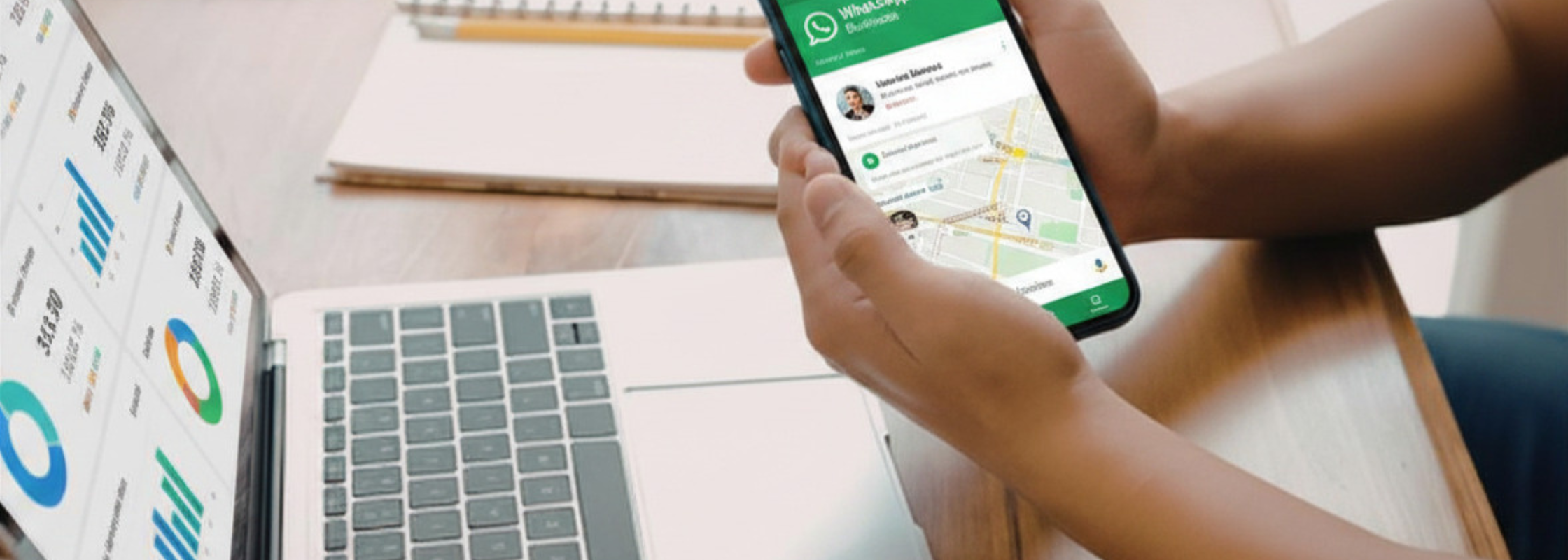
WhatsApp is part of daily life for most Kenyans. For many Nairobi businesses For many Nairobi businesses, it is already the primary way they talk to customers. What very few businesses do is treat it as a marketing channel with any structure behind it.
A WhatsApp Business account gives you a business profile, quick replies, automated greeting messages and catalogue features for products or services. More importantly, you can create broadcast lists to send updates, promotions and content to existing customers without paying for advertising.
Customers who have already bought from you are the easiest people to sell to again. A restaurant that sends a weekly specials message to its broadcast list, a salon that sends appointment reminders and a shop that messages customers when new stock arrives are all using the same channel most of their competitors are ignoring.
WhatsApp is also the most effective way to follow up on Google Ads and web enquiries. A customer who fills in a contact form and gets a WhatsApp message within ten minutes is far more likely to convert than one who gets an email two days later.
5. Social media: choose the right platform and use it consistently
The most common social media mistake Nairobi businesses make is being present on every platform without doing any of them well. A neglected Instagram page with the last post from 2024, a Facebook page with unanswered comments and a Twitter account with three followers do more harm than no social media presence at all.
Facebook and Instagram for consumer businesses
For businesses selling to individuals, Facebook and Instagram are the most effective platforms in Kenya. Facebook still has the largest audience across age groups. Instagram performs well for businesses that are visually led: restaurants, fashion, beauty, interior design, hospitality and anything where photos of the product or service sell it.
Organic reach on both platforms is limited, so consistency matters more than volume. When a post is already performing well, a small boost can extend it to new people, but the content has to earn attention first.
LinkedIn for B2B and professional services
For accountants, consultants, lawyers, recruitment firms, NGOs and anyone selling to other businesses, LinkedIn is usually the better fit, because that is where many decision-makers look for suppliers, partners and expertise.
Consistency over volume
Posting three times a week consistently for a year is more valuable than posting daily for two weeks and then going quiet for three months. Customers who follow you and see nothing for months may assume you have closed.
6. Your website: the one thing you actually own
Social media platforms change their algorithms. Ad costs go up. Google updates its ranking criteria. Your website is the one piece of your online presence that you fully control.
A well-built Nairobi business website does several things: it ranks for searches, it converts visitors who arrive from ads and social media, and it gives customers a reason to trust you before they pick up the phone. A weak website undercuts every other channel. Strong social media, good Google rankings and a well-managed ads campaign all perform better when they send people to a site that looks professional and loads quickly on mobile.
Most Nairobi customers will see your website on a phone first. A website designed mainly for desktop gives them a poor first impression.
How to prioritize if you have a limited budget
Not every business can do everything at once. If you are starting from scratch, this is the order that makes the most sense for most Nairobi SMEs:
1. Set up and optimise your Google Business Profile (free, high impact, often noticed quickly)
2. Make sure your website is mobile-friendly, fast and has the basics of on-page SEO (high impact, and the foundation for every other channel)
3. Start WhatsApp Business and build a broadcast list from your existing customers
4. Add one social media platform and post consistently rather than spreading across three
5. Start Google Ads once you have a converting website to send traffic to
6. Add SEO and content marketing as a longer-term investment once the above are running
FAQ
How much should a Nairobi business spend on digital marketing?
It depends on how many channels you need, how competitive your industry is and whether you use paid advertising. Most small businesses should start with one or two channels, such as their Google Business Profile and website, and add more once those are working. We quote every project in writing after a short conversation.
Does social media actually drive sales for Kenyan businesses?
For consumer businesses, yes, when it is done consistently. The businesses that get results post regularly, answer every comment and message, and make it easy to enquire on WhatsApp. A small paid boost can help good content reach more people..
Does social media actually drive sales for Kenyan businesses?
For consumer businesses, yes, when it is done consistently and backed by a small paid budget. Organic-only social media rarely drives significant sales in 2026. The businesses that get results from social media in Nairobi are the ones posting regularly, responding to every comment and boosting the content that is already getting engagement.
How long does digital marketing take to produce results in Kenya?
It depends on the channel and your starting point. Paid ads can bring enquiries soon after they start; Google Business Profile and website fixes can be noticed within weeks; SEO and content build over months. Treat it as an ongoing investment rather than a thirty-day experiment, and agree what you will measure before you start.
Can digital marketing work for an NGO in Kenya?
Yes. A clear website, consistent branding, an accurate Google Business Profile and regular updates on one or two social platforms help donors, partners and communities understand your work. Eligible NGOs can also apply to Google's Ad Grants program for free search advertising. See our NGO marketing in Nairobi page.
Jebilton Ventures is a digital marketing agency in Nairobi, founded in 2017, helping businesses and NGOs decide where to start and then doing the work. Tell us what you need and we will reply with the next step.