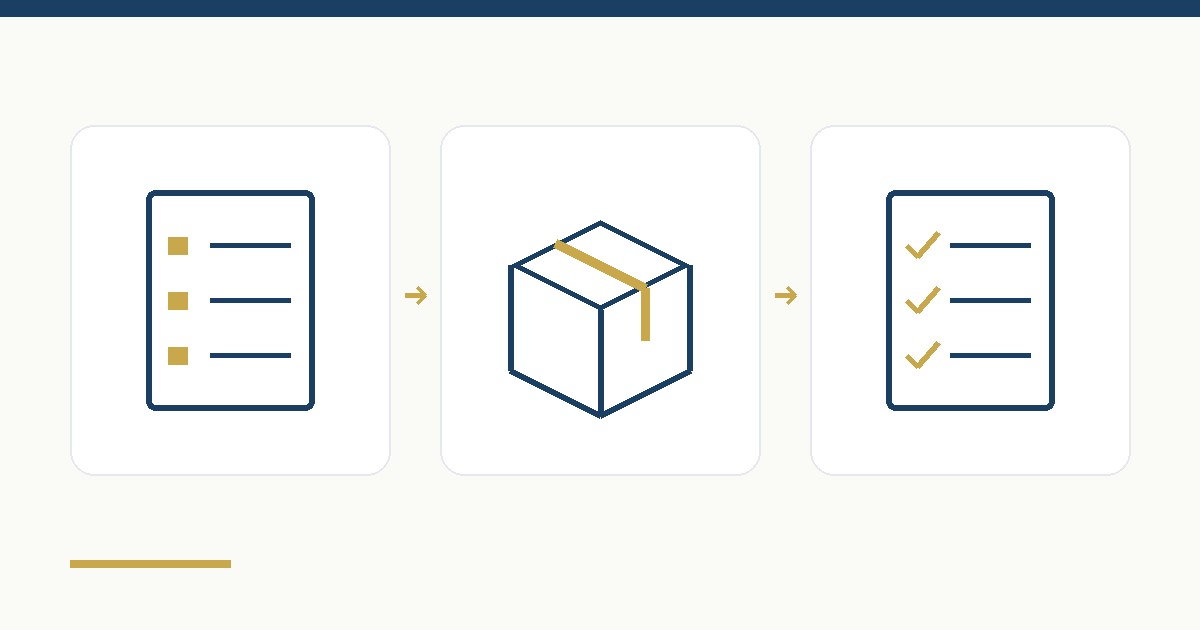

A branded-merchandise order starts with more than choosing an item and adding a logo. The people receiving it, how they will use it and the date it is needed all help shape the specification.
Whether you are organising staff apparel, 2027 diaries and calendars, notebooks or materials for an event, a clear order brief helps everyone work from the same requirements.
1. Begin with the recipient and purpose
Identify who the items are for and what they need to do. Everyday staff wear, a conference handout and a client gift serve different purposes.
For illustration, a team ordering work shirts needs garment and size information. An organization preparing notebooks for participants needs to think about the writing format, quantity and artwork. Neither brief can be settled by the instruction “put our logo on it” alone.
Separate essential requirements from preferences. That gives the supplier room to discuss suitable options without silently substituting something important.
2. Build the quantity and specification list
Use one list for the proposed order. Include:
🔳Item type and quantity.
🔳Dimensions or garment sizes, where relevant.
🔳Preferred material, color and finish.
🔳Branding position and any personalized details.
🔳Packaging, sorting or labelling requirements, if needed.
🔳Intended delivery date and location.
For apparel, collect sizes rather than guessing the mix. For items bearing individual names, check spellings carefully and provide one approved version of the list. Share only the information needed for production.
If your quantities are estimates, say so. A quotation based on an estimate may need review when the order changes. Ask the supplier to explain which specifications still require confirmation.
3. Share the artwork you actually have
Provide the available logo and any approved colors, wording or layout guidance. The supplier can then assess whether the files are suitable for the intended application.
If artwork preparation or design is required, make that a defined part of the scope. Do not assume it is included in the item price. Equally, an approved digital layout does not automatically specify every production detail.
Discuss branding size and position on the actual item. Ask how colours and fine details will be handled using the proposed material and production method. Where a sample or proof is appropriate, confirm what it will show, what it costs and what approval it requires.
4. Read the quotation as an order specification
A useful quotation should let you check what you are buying, not just the final amount.
Look for the agreed items, quantities, specifications and artwork work. Confirm whether branding application, packaging and delivery are included. Ask about any other charges before approving the order.
Availability and production timing need to be checked for the actual project. Do not rely on a turnaround quoted for a different item or an earlier order. If you have an event date, share it at the enquiry stage and ask for a feasible schedule.
If the quotation has expired or the specification changes, request a review before treating the earlier price as current.
5. Approve the final version before production
Choose one person to coordinate feedback. Record the final artwork, quantities, sizes, specifications and delivery instructions together so there is a clear approved reference.
A message such as “looks fine” is more useful when it identifies exactly which proof or version is being approved. Resolve conflicting feedback before production begins.
Changes after approval may affect costs and dates, particularly when items have already been produced or materials committed. Agree the revised work before assuming the original quotation still covers it.
At Jebilton, production proceeds under the agreed approval and payment conditions. The exact terms should be clear in your project documents.
6. Plan delivery and receipt
Confirm the destination, receiving contact and practical delivery arrangements. If the order must be split between locations, say so in the brief rather than at dispatch.
On receipt, compare the items with the approved specification and quantity list. Record any issue clearly, with the relevant item details and photographs where appropriate, so it can be assessed against what was agreed.
For a future repeat order, retain the approved artwork/version and specification. An old photograph alone may not capture material, size or finishing details and availability and pricing still need to be reconfirmed.
Planning year-end items: diaries, calendars and notebooks
Branded diaries, desk and wall calendars and notebooks are often wanted for the first weeks of January, for staff, clients or members. Because they carry dates, they are only useful if they arrive on time, so the planning starts earlier than for most merchandise.
A few points to settle in your brief:
🔳Who receives them and how many. Staff, board members, clients or members may need different items or quantities.
🔳Format. For diaries: page size, day-per-page or week-per-page, and cover material. For calendars: desk or wall, and how many pages. For notebooks: ruled or plain and size.What is printed inside. Some organizations add their own pages, such as a mission statement, contacts or key dates. Say so early, because these pages need content and approval before printing.
🔳Branding. Logo position and method on the cover and whether names or numbers are added to individual copies.
🔳The date you need them in hand. Share it at the enquiry stage and ask for a schedule that works back from it, including proof approval and delivery.
If you are not sure of final quantities, send an estimate and say so. It is easier to confirm numbers than to rush production in late December.
We have produced branded diaries, desk calendars and notebooks for Nairobi organisations, and the same checklist above applies to them.
Copy this merchandise enquiry template
🔳Organization and purpose:
🔳Intended recipients:
🔳Items and quantities:
🔳Sizes, dimensions, colors or materials:
🔳Logo/artwork available and design help needed:
🔳Branding positions or personalized details:
🔳Required date and delivery location:
🔳Packaging or sorting requirements:
🔳Person coordinating approval:
You can mark unfamiliar specifications as “please advise”. A clear discussion is better than approving an assumption that does not match what you need.
Discuss your order with Jebilton
Jebilton Ventures handles suitable branded merchandise, design and production coordination within an agreed scope. Send your item list, quantities, artwork status and required delivery date to info@jebiltonventures.co.ke, or contact us on WhatsApp.
We will discuss the specifications and confirm the quotation and production requirements for your project. Stock, price and completion dates are confirmed for the actual order.